In this installment of ‘Larger Than Life: Architecture Through the Ages,’ we visit one of America’s oldest continuously functioning state capitol buildings.
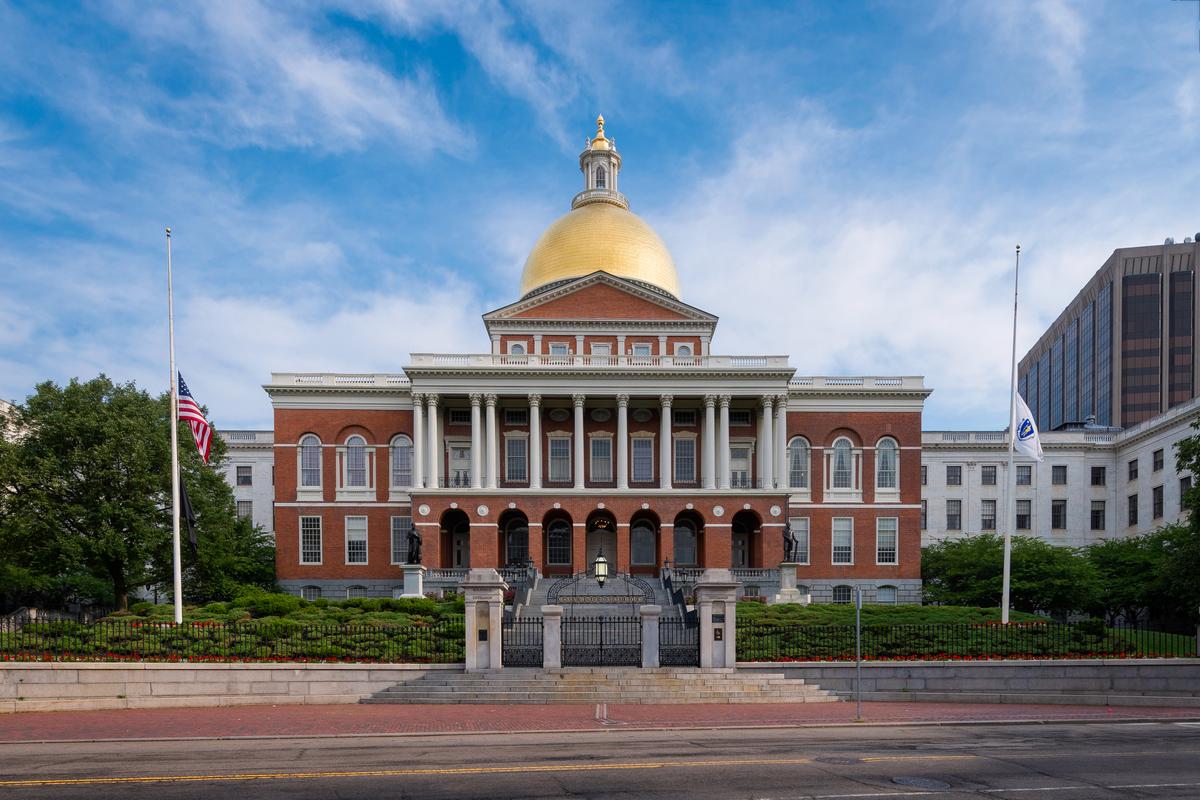
The Massachusetts State House features a stately exterior of red brick faced with ashlar granite. Elegant sandstone trim around windows and cornices provides a refined contrast to the darker brick and granite base, highlighting the building’s balanced neoclassical design. Nagel Photography/Shutterstock
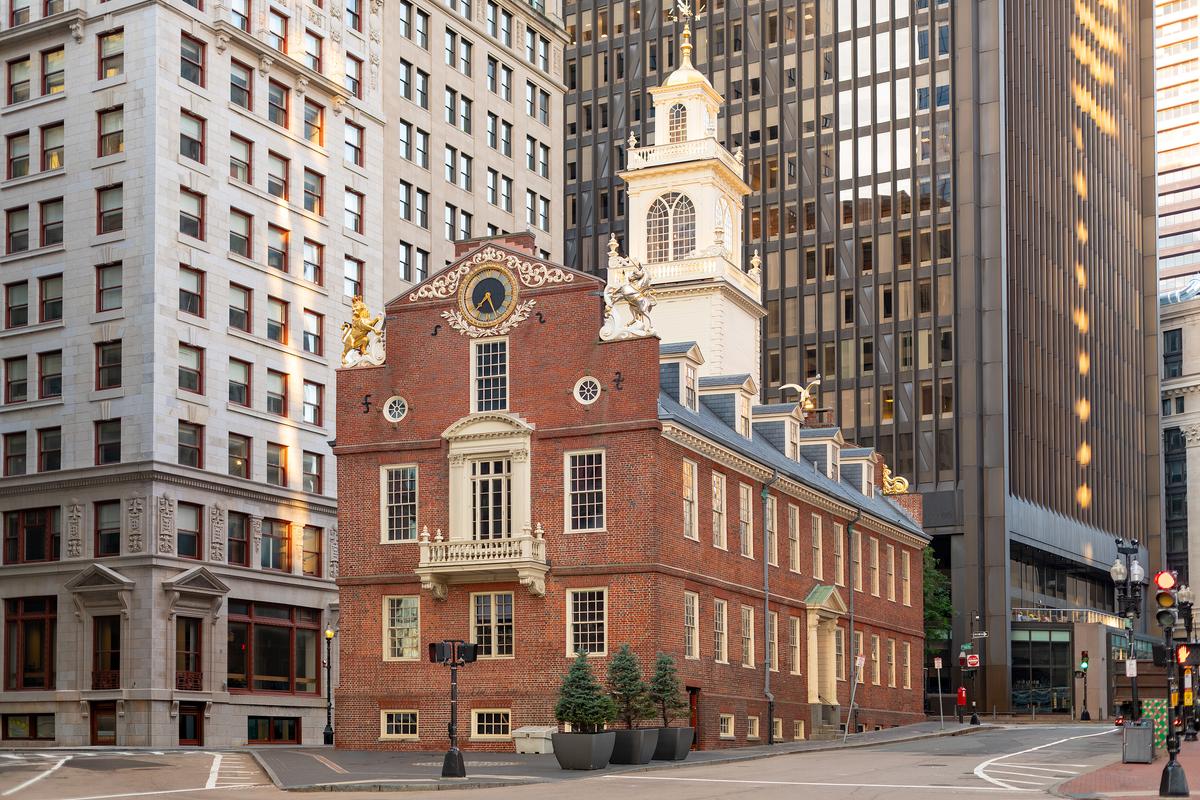
Rising above Boston’s historic streets from its prominent perch atop Beacon Hill, the Massachusetts State House commands attention with its iconic golden dome, one of the most recognizable features of the city’s skyline. Completed in 1798, the building has served as the seat of government for the Commonwealth of Massachusetts for more than two centuries. It replaced the colonial-era Old State House, which had housed the government since 1713.
Its construction came after the American Revolution, as the United States was defining its new civic and governmental identity. Work on the building began with a cornerstone ceremony on July 4, 1795, led by Governor Samuel Adams and Paul Revere, who presided in his official capacity as Grand Master of the Grand Lodge of Masons.
A time capsule was placed under the Massachusetts State House cornerstone by Adams, Revere, and Col. William Scollay. Often regarded as the oldest known time capsule in the United States, it contains coins, newspapers, and other artifacts from the early republic. It has been recovered and reinterred several times, most recently in 2014. Returned to the cornerstone in 2015 after conservation and documentation, the capsule remains a point of public interest, with footage of its unearthing available on Boston’s Museum of Fine Arts website.
The Massachusetts State House, designed by Charles Bulfinch, exemplifies Federal-style architecture. Through its balanced proportions and classical influences, Bulfinch sought to create a structure that projected dignity and civic responsibility.
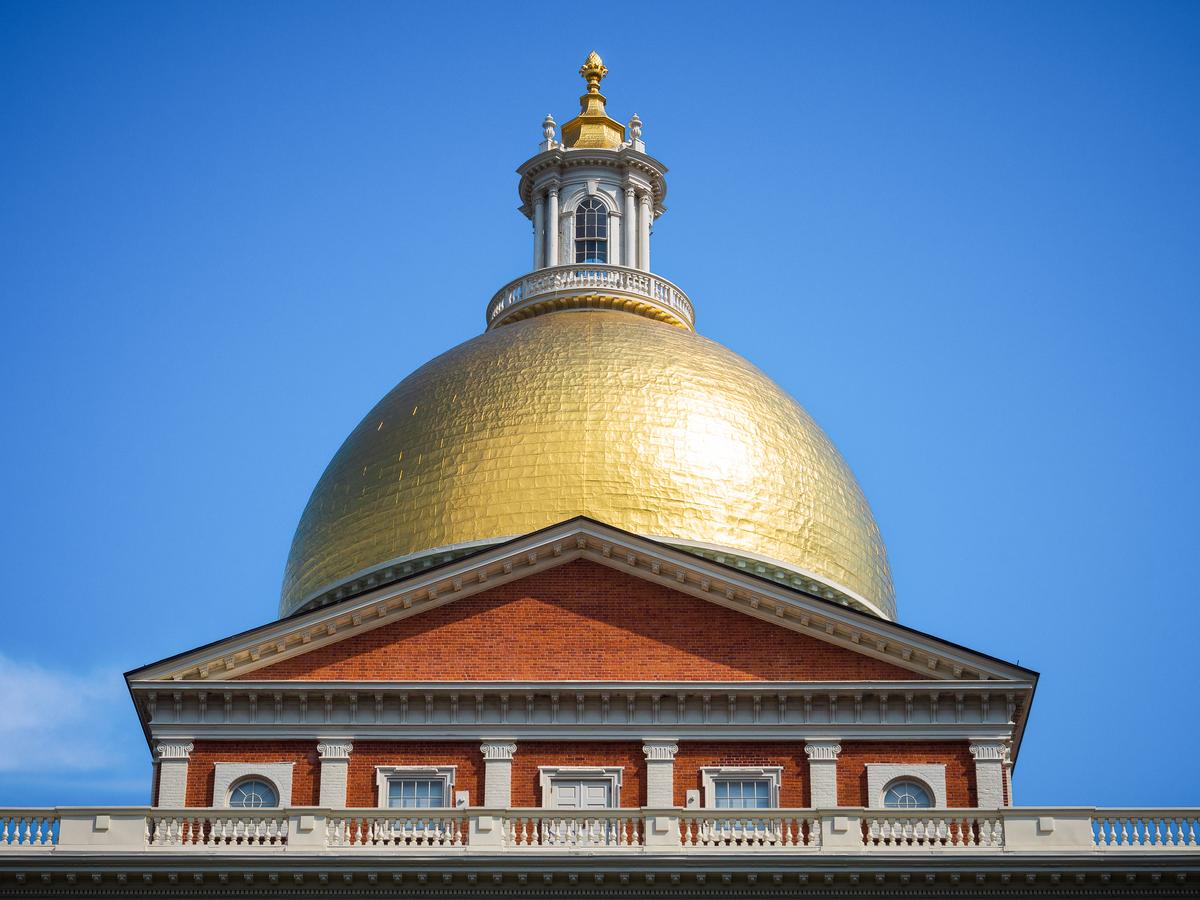
The most celebrated feature is its dome. Originally covered with wooden shingles, it soon became apparent that the material offered insufficient protection against water infiltration. To address this, the dome was sheathed in copper by Revere’s foundry in 1802. Later gilded with 23-karat gold leaf, it remains a shining symbol of Boston. Crowning the dome is a gilded pine cone finial representing growth, prosperity, and New England’s timber industry. The building has expanded considerably since its completion, including a major annex added in 1895 and east and west marble wings constructed between 1914 and 1917.
Today, the State House encompasses an average of more than 250 offices across approximately 660,000 square feet. Its interior is organized around a central rotunda beneath the dome, from which corridors and chambers radiate in an orderly arrangement. Beyond its architectural grandeur, the State House contains numerous features that connect visitors to the Commonwealth’s history, including murals, wartime memorials, flags, and the famous Sacred Cod. This carved wooden fish symbolizes the importance of the fishing industry to the state’s economy and heritage.
As both an active seat of government and a historic landmark, the building houses the governor’s office, the Massachusetts General Court, several constitutional officers, and the administrative departments that help govern the Commonwealth. Legislative debates, committee meetings, public hearings, and official ceremonies still take place within its chambers, while its doors remain open to students, researchers, and visitors from around the world.
Situated along the Freedom Trail and surrounded by monuments, statues, and landscaped grounds, the building connects the revolutionary past with the present.
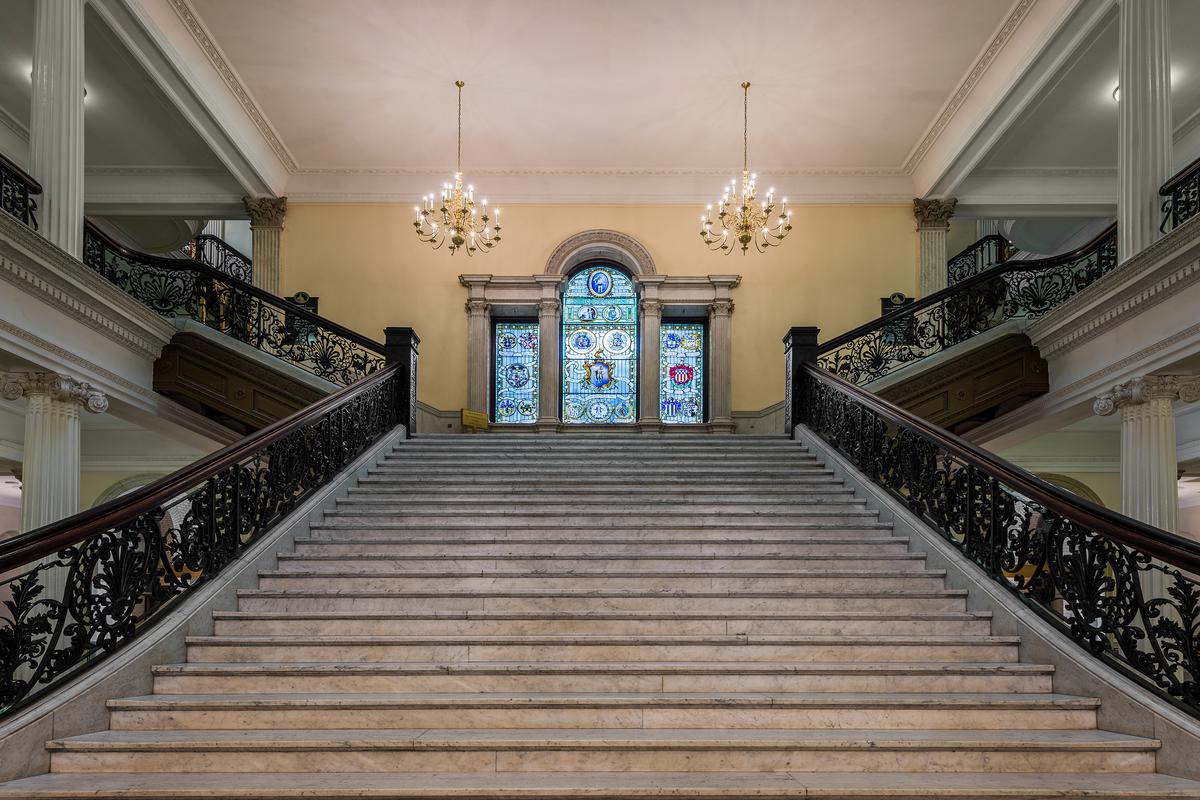
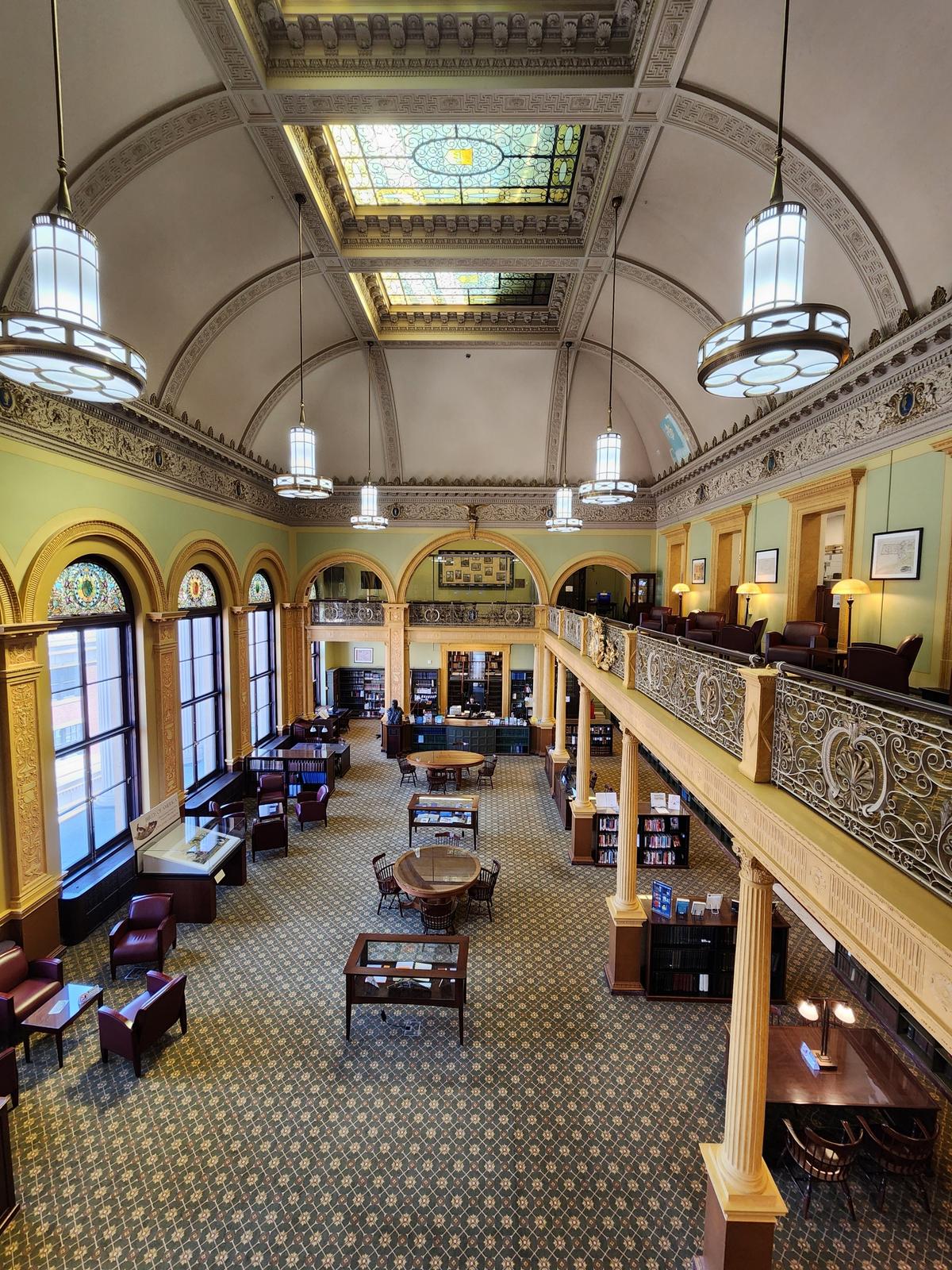
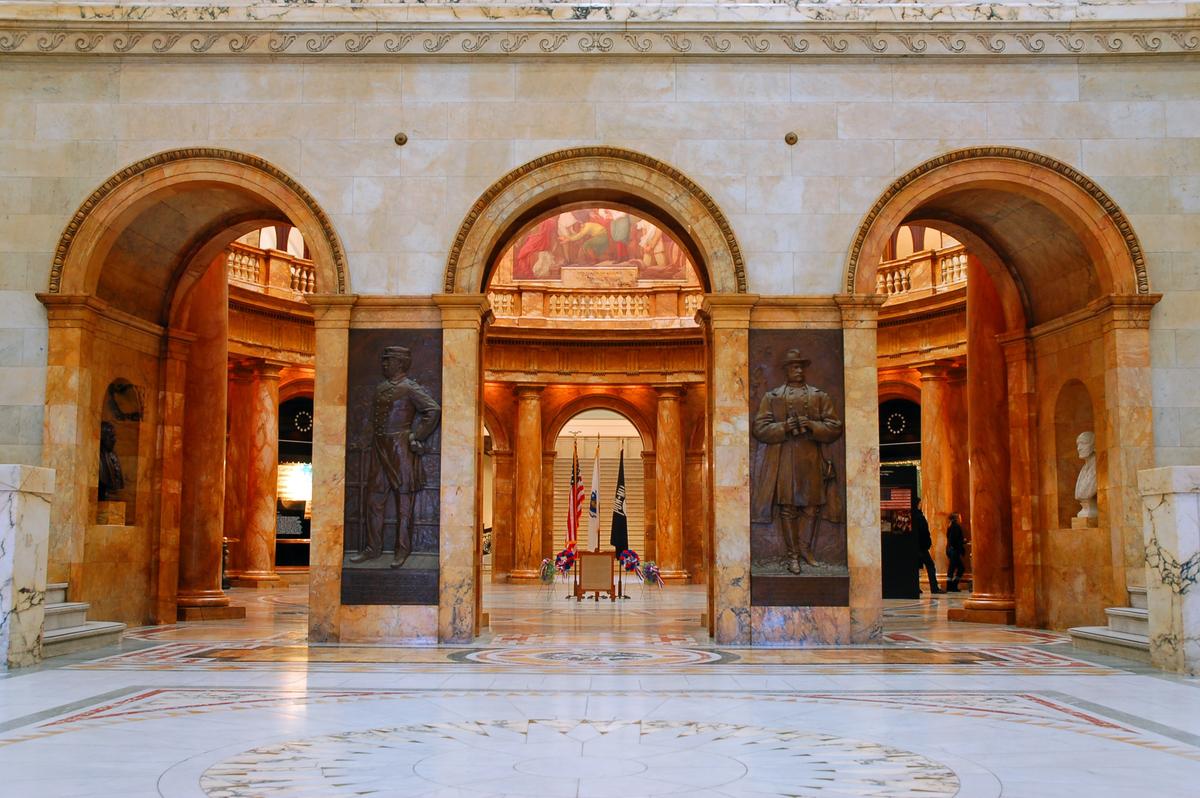
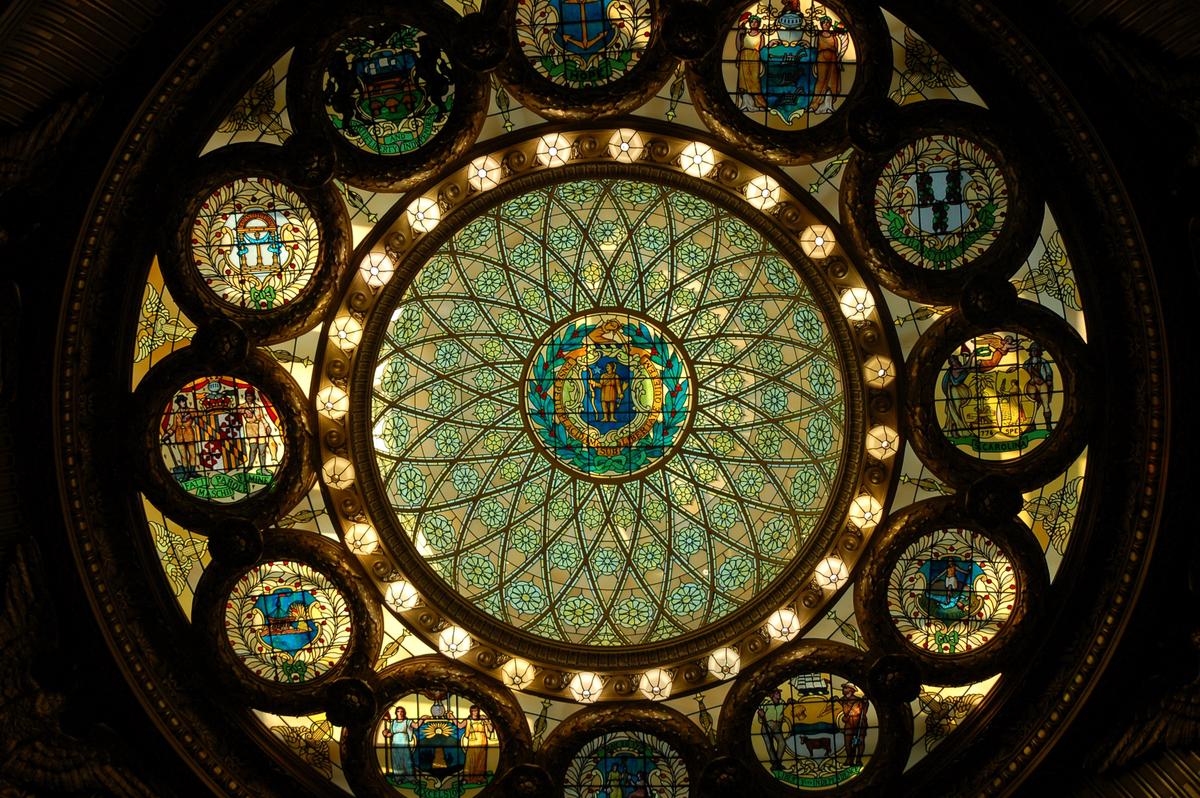
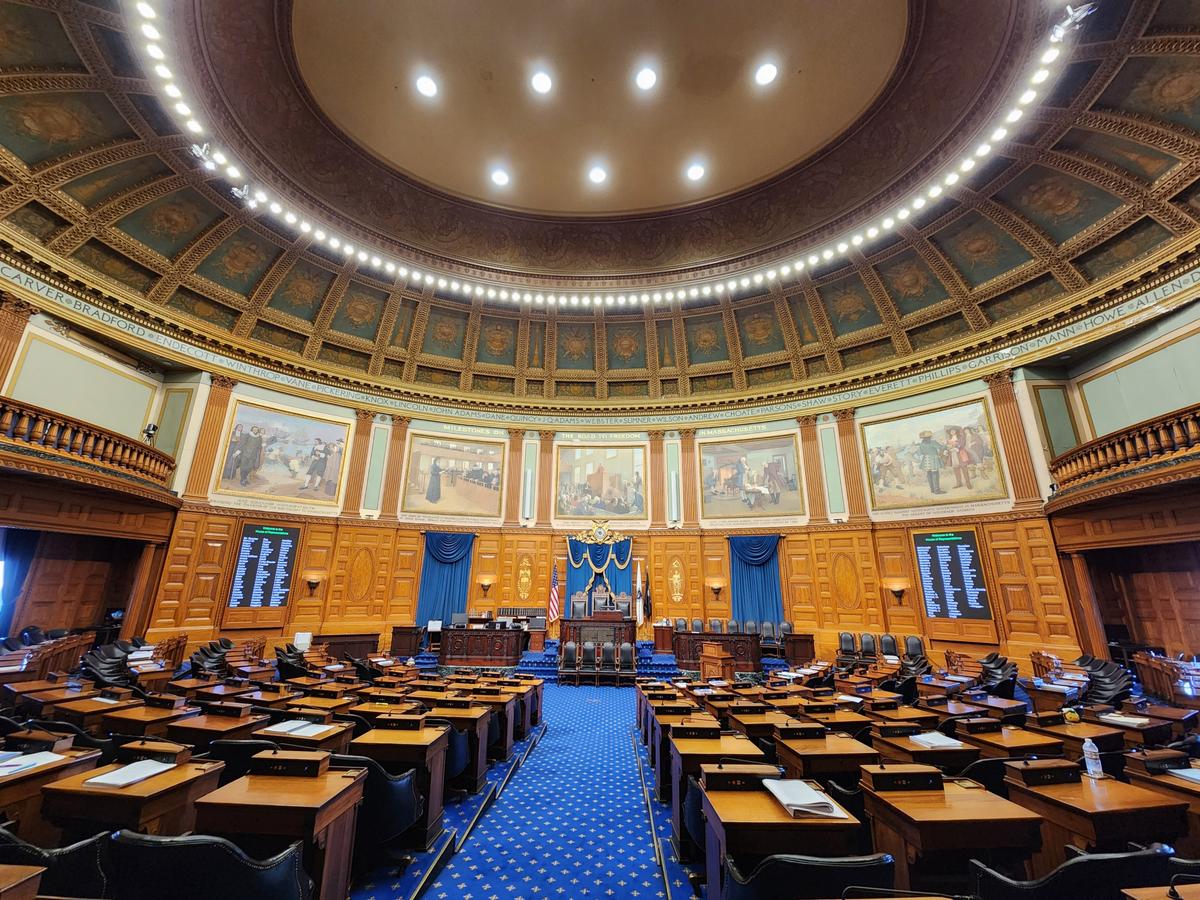
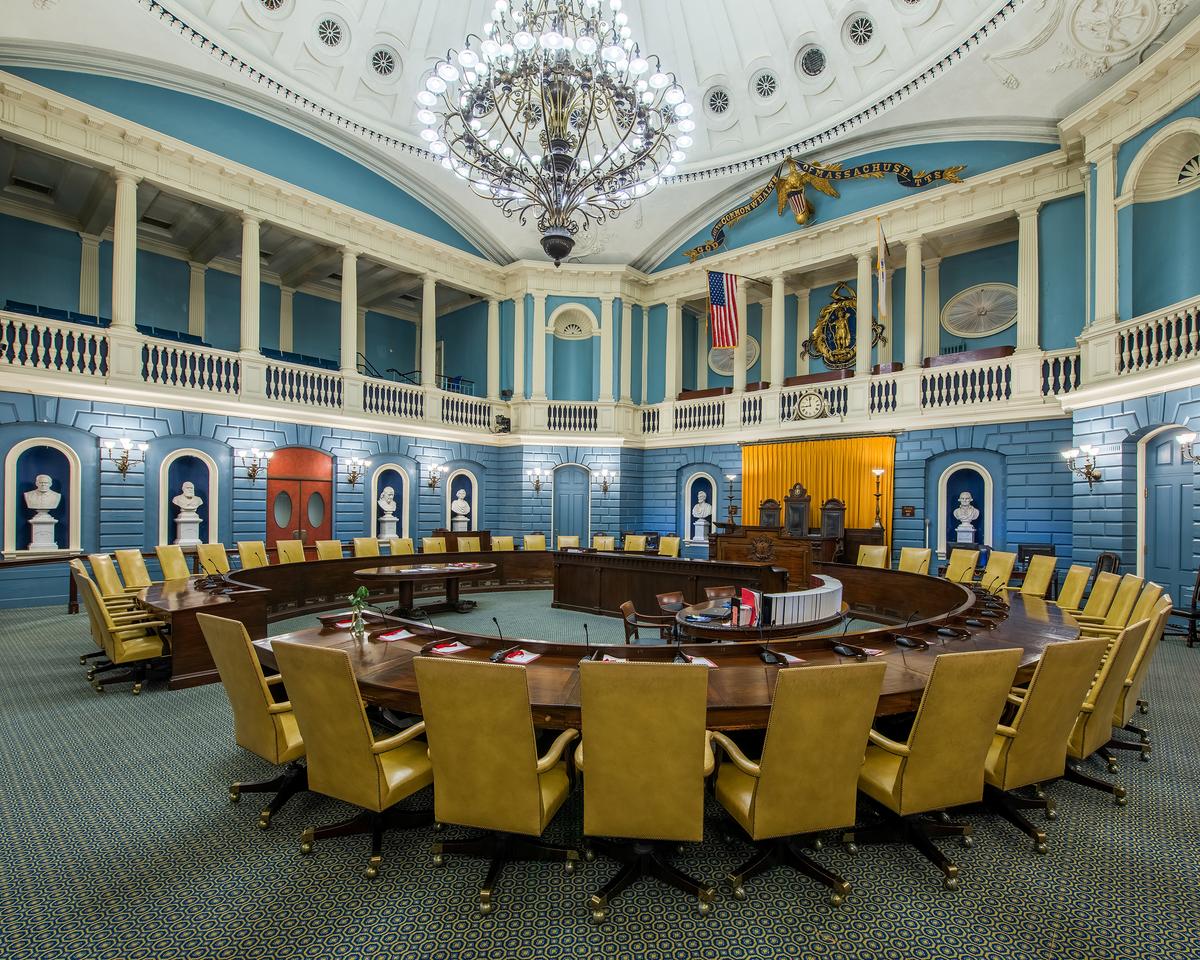
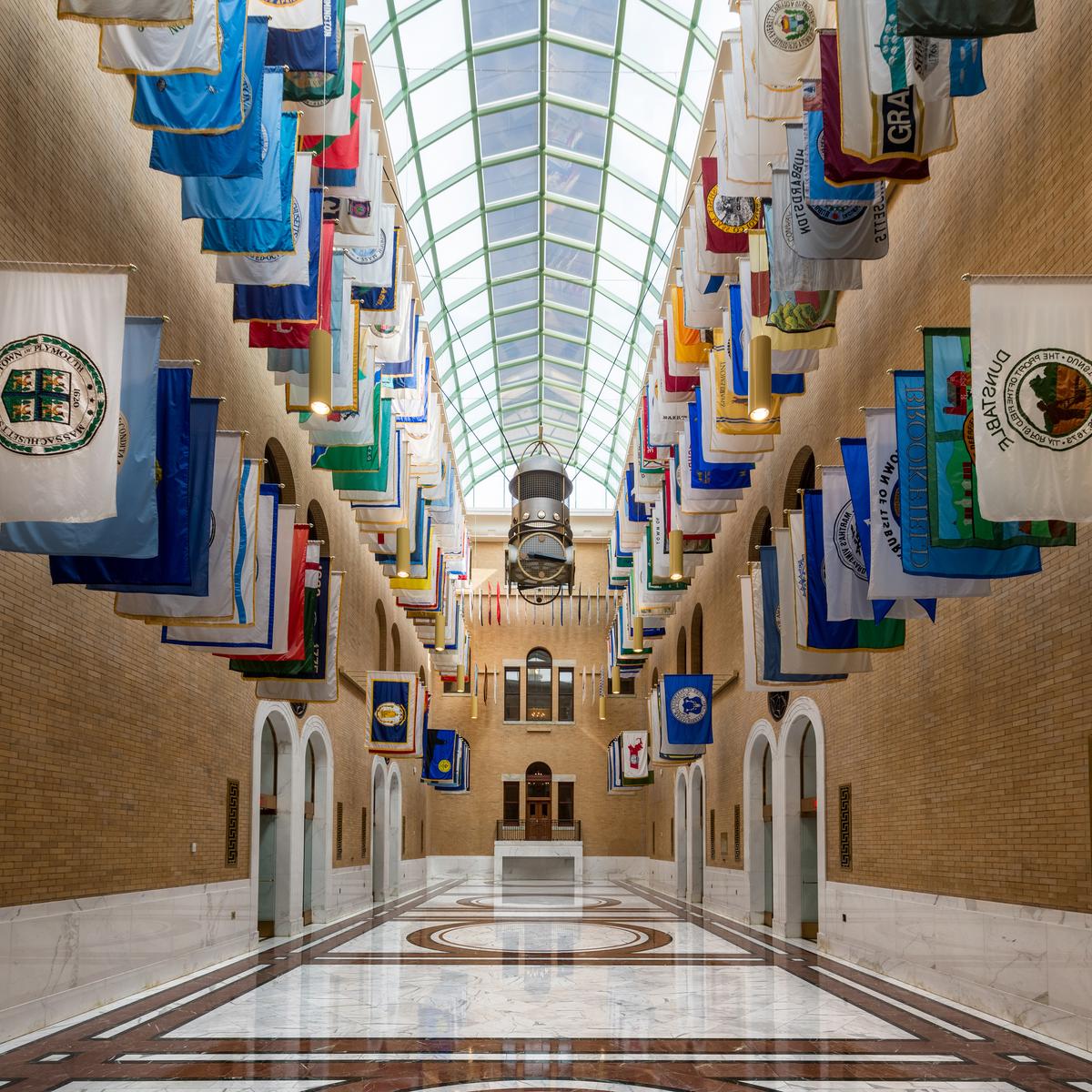
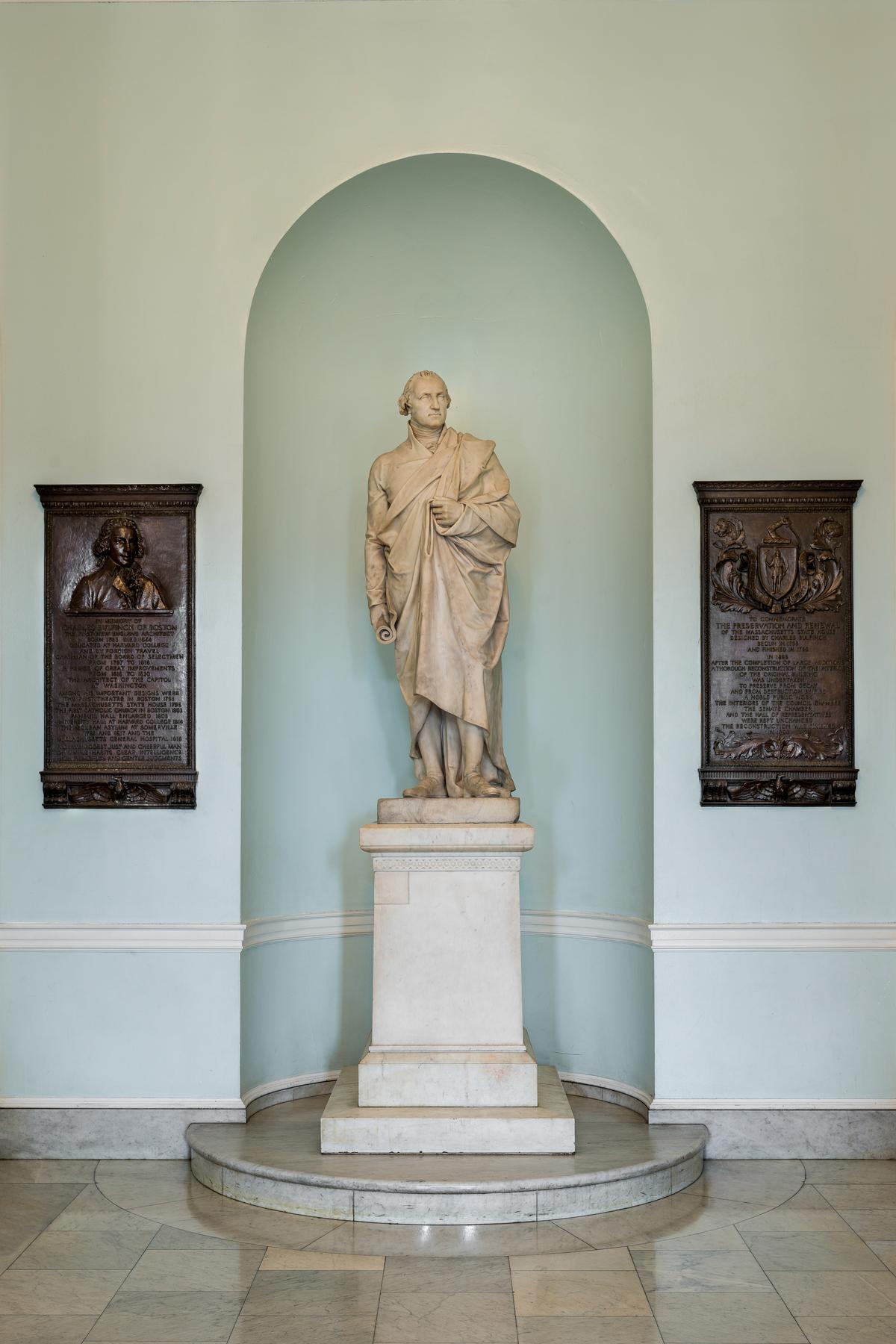
The Massachusetts State House is crowned by its celebrated gilded dome, a defining feature of its Federal-style design. At the summit, a circular lantern brings in natural light and completes the dome’s vertical axis, while a pine cone finial serves as a symbolic capstone, finishing the composition with a distinctive touch. Beneath the dome is a low-pitched triangular pediment, functioning as a transition piece and common in Federal-style architecture. Victor F Rodriguez Jr/ShutterstockThe grand staircase features elegant granite treads on the horizontal surfaces of each step, paired with wrought-iron railings. A balustrade of carved wood and detailed ironwork guides movement between floors. A sizable Palladian stained-glass window at the half landing displays Massachusetts seals in vivid color, tracing themes from colonial charters through revolutionary and state government heritage. Nagel Photography/ShutterstockThe refined State Library interior features wood shelving and paneled walls, along with climate-controlled archival storage designed to preserve legislative documents. Granite structural elements echo the building’s enduring New England stone construction. Founded in 1826, the library has evolved from a legislative resource into a robust research center, serving lawmakers, historians, and scholars. ChicagoPhotographer/ShutterstockMarble detailing frames the entrance to the rotunda, while doorways and arches feature wood framing reinforced with metal hardware, reflecting 19th-century upgrades. Positioned beneath the building’s gold dome, the rotunda marks the exact seam where the original State House meets its rear addition, making it the architectural hinge of the complex: to cross through is to walk from old into new. James Kirkikis/ShutterstockThe stained-glass skylight above Memorial Hall features a vivid circular design. At its center is an early Massachusetts state seal depicting an Algonquian Native American with a bow and arrow, surrounded by the seals of the other 12 original colonies. Crafted by Ford and Brooks and installed in 1900, it bathes the Hall in softly filtered light. James Kirkikis/ShutterstockThe oval Massachusetts House of Representatives Chamber is encircled by five monumental murals, “Milestones on the Road to Freedom in Massachusetts,” painted in 1942 by Albert Herter. The series depicts key events shaping colonial liberty, from Governor Winthrop bringing the 1630 charter to John Adams drafting the 1779 state constitution, framing the chamber in meaningful historical narrative. ChicagoPhotographer/ShutterstockThe Massachusetts Senate Chamber includes balcony-level public viewing galleries overlooking the floor below. Along the chamber’s walls are marble niches honoring prominent historical figures such as George Washington, Abraham Lincoln, Benjamin Franklin, Marquis de Lafayette, and Charles Sumner. In 2024, a bronze bust of Frederick Douglass was installed, marking the first time a person of color has been honored in this way within the State House. Nagel Photography/ShutterstockThe impressive Great Hall of Flags in the Massachusetts State House was completed in 1990, rising from the basement and capped with a glass dome. This elegant tri-colored marble hall features a brilliant glass ceiling, while its walls are lined with flags representing municipalities across Massachusetts. Nagel Photography/ShutterstockThis life-size statue of George Washington, the first monumental marble sculpture in Boston, was created by Sir Francis Chantrey in 1826 and dedicated in 1827. It shows Washington in a Roman senator’s toga draped over his Revolutionary War uniform, reflecting a broader early 19th-century debate between historical accuracy and classical idealization. The work is displayed in Doric Hall. Nagel Photography/ShutterstockThe Old State House in Boston is built of red common brick in English bond with traditional lime mortar. Once the prominent center of colonial and early state government from 1713 to 1798, it housed all three branches before being replaced by the more grand Massachusetts State House on Beacon Hill, designed by Charles Bulfinch and completed in 1798. Jose Luis Stephens/Shutterstock